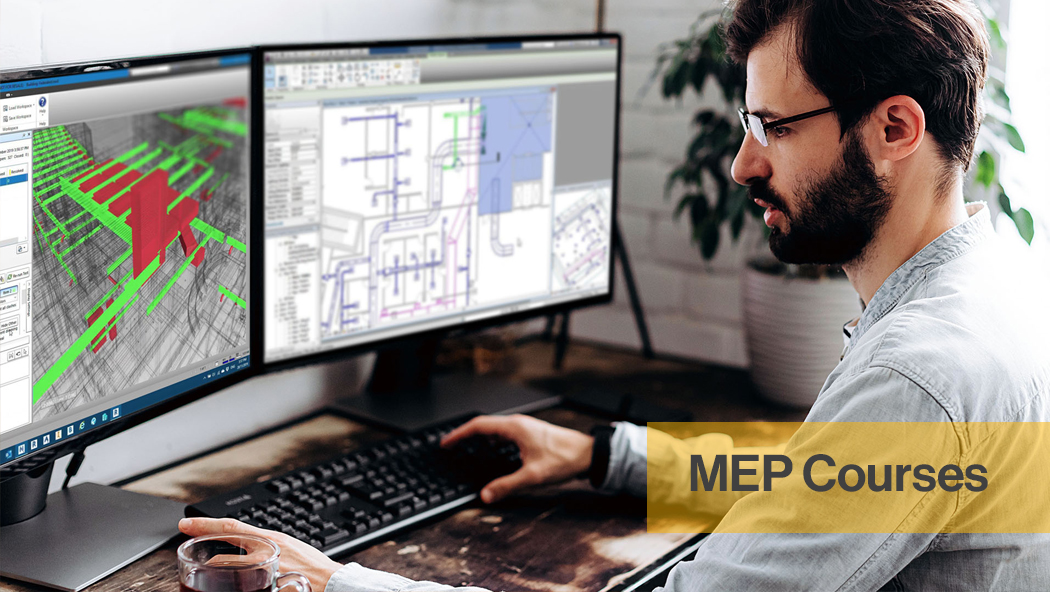
What is MEP Engineering and Its Career Scope - A Complete Guide

Today, tall buildings have become the dominating symbols of urban cities. Have you ever wondered about the humans behind these marvels that reach the clouds? It is the civil engineers who play a vital role in the construction industry. They are responsible for the design, supervision, management, and construction of buildings, dams, bridges, roads, etc. It is a broad field that includes structural engineering, MEP engineering, environmental engineering, etc. Civil engineers have a wide range of employment opportunities both in the private and public sectors of Dubai. MEP (mechanical, electrical & plumbing) services include air conditioning, rainwater harvesting, heating, ventilation, etc. Let’s dig deep to learn more about the MEP engineering course and its scope.
What Is MEP Engineering And Its Scope?
MEP is the short form of mechanical, electrical, and plumbing. MEP engineering is the branch of engineering that deals with heating, plumbing, ventilating, electric systems, and ventilation of a building. MEP engineering is important for the success of a project because it covers a wide scope such as planning, construction, cost estimation, and maintenance of mechanical, electrical, and plumbing.
List of Courses in MEP Engineering
1. MEP Training:
MEP training course focuses on the use of software and modern methods to design mechanical, electrical, and plumbing systems of buildings. The software tools include Autodesk, AutoCAD MEP, Revit MEP, etc. MEP engineers ensure the efficient functioning of building systems. You can expect to learn BIM, HVAC, sustainability, mechanical design, electrical design, plumbing design, etc.
2. HVAC Design Training:
Heating, ventilation, and air conditioning system design training is important for designing systems that control indoor environments' temperature and air quality. HVAC design trainingcourse includes psychometrics, heat load calculation, air distribution system designing, heating system, cooling system designing, CAD, etc.
3. Plumbing Design And Technician Course:
This course covers principles of plumbing design including water supply, rainwater harvesting, and drainage. You learn codes and standards for plumbing design Plumbing fundamentals, blueprint reading, pipe installation and repair, and fixture installations are taught in the plumbing technician training course.
4. Fire Technician Course:
Fire technician course prepares students for a career in fire protection and safety designing. Fire technicians play a vital role in installing and maintaining fire safety and detection systems in buildings.
5. STAAD.Pro Course:
STAAD.Pro is a software application used in civil and structural engineering. It is used for designing and analyzing large structures like bridges, dams, towers, and more. The STAAD.Pro course covers a wide range of topics such as basic principles, modeling, types of analysis, structural analysis, etc.
6. Revit Training Course:
Revit is a software used for designing and construction of buildings. Revit training course includes topics to help students to become proficient in using the software.
Also Read:
MEP Engineering Courses For Professional Design and Technicians
| Design/Engineering | Duration | MEP Industrial | Duration |
|---|---|---|---|
| HVAC Design Course Dubai | 6 Weeks | HVAC Technician | 6 Weeks |
| Electrical Design Training | 6 Weeks | Electrical Technician | 6 Weeks |
| Plumbing and Drainage Design | 5 Weeks | Plumbing Technician | 6 Weeks |
| Fire Fighting Training Course | 6 Weeks | Fire Fighting Technician | 6 Weeks |
| Extra Low Voltage (ELV) Technician | 6 Weeks | ||
| Building Management System Technician | 6 Weeks | ||
| Electrical Control Panel Technician | 6 Weeks |
Importance Of Pursuing MEP Engineering In Current Career Opportunities
- MEP engineering mechanical, plumbing, electrical engineering plays a significant role in the current scenario because of its valuable contributions to the construction of buildings.
- There is a growing awareness of energy efficiency, energy conservation, sustainability, and green technologies. As MEP engineers are skilled in optimum energy and resource utilization, there will be a high demand for them.
- Moreover, they are essential for integrating advanced technologies like automation to improve the overall efficiency of the buildings.
- Job opportunities are increasing in areas like fire protection, HVAC systems, water supply, electrical design, mechanical design, etc.
- MEP engineering offers a diverse range of career opportunities in the field of construction and maintenance of buildings.
Popular Software Courses In MEP Industry:
- ETAP Software (Commonly used in electrical design projects for electrical power system analysis and design)
- STAAD Pro Steel Design (Used for structural analysis and steel design for MEP-related structure)
- REVIT Software (Tool used for 3D modeling, simulation, and documentation of MEP systems.)
- ETABS Software (For Structural analysis and design for building systems)
- HAP Software (Used in HVAC system load calculations and energy modelling)
Conclusion
MEP engineering is poised for transformation and advancements in the future. It is evident that MEP engineers will play a vital role in creating sustainable and technologically advanced buildings. Aspiring MEP engineers should seek out educational courses to improve their skill sets. Enroll in the right courses now.
Recent Blogs